
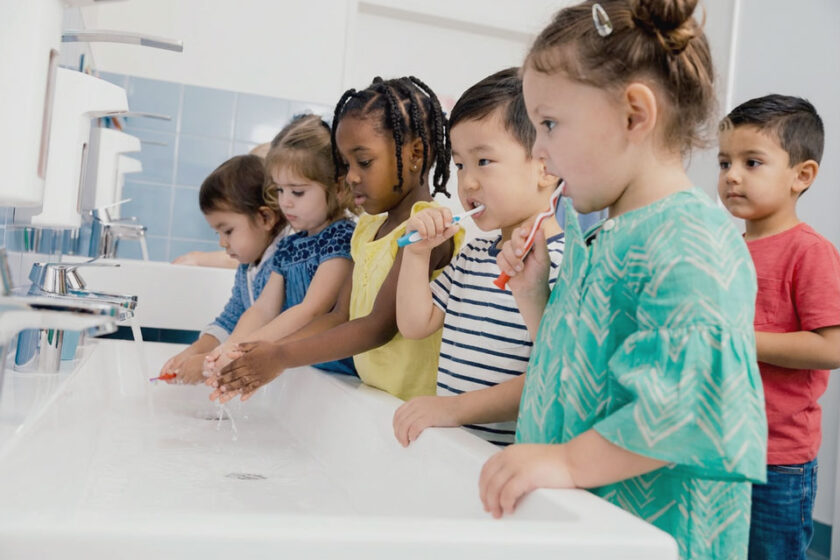
Daily routines form the backbone of healthy early learning environments. Whether at home or in an early learning program, predictable patterns help children feel safe, confident, and ready to explore. When adults use consistent, responsive routines throughout the day, children experience emotional security, smoother transitions, and deeper opportunities for learning.
Research from ZERO TO THREE, the Harvard Center on the Developing Child, NAEYC’s Developmentally Appropriate Practice (DAP), and the Pyramid Model consistently shows that routines reduce stress, support brain development, strengthen relationships, and build the skills children use to manage emotions, learn new concepts, and participate with others.
The Science Behind Routines
Routines provide young children with a sense of stability. Predictable patterns build safety and trust, repetition strengthens self-regulation and executive function, and daily rhythms support well-being. When routines are responsive to each child’s age, personality, culture, and family traditions, children experience an environment where their needs and identities are respected.
Infants: Routines Built on Connection
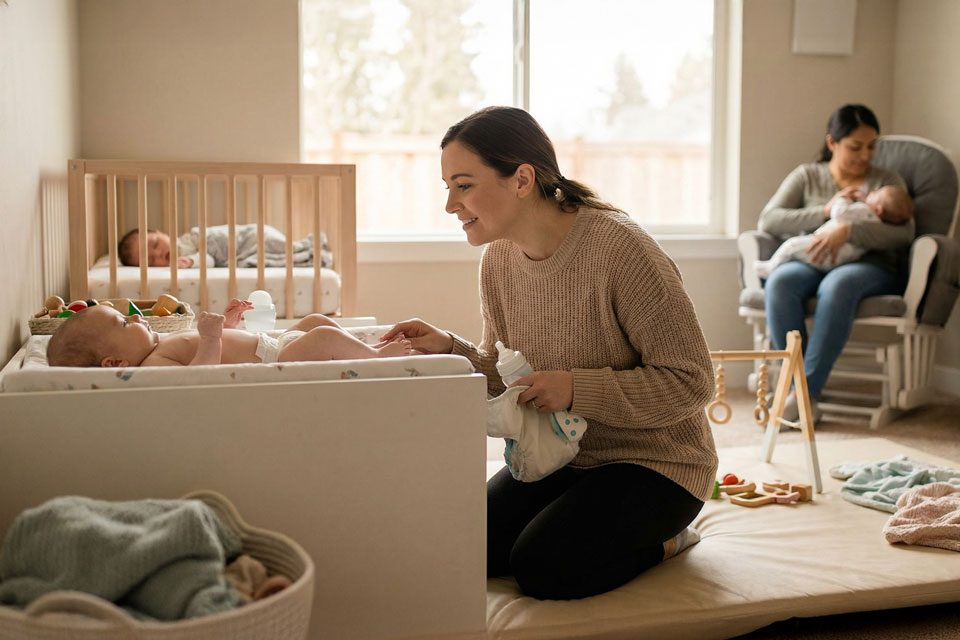
For infants, routines are centered on warm and responsive caregiving. Feeding, diapering, soothing, and sleep rituals become opportunities for connection. When caregivers use calm voices, narrate actions, and respond promptly, babies learn that the world is safe and predictable. These interactions support early communication, emotional regulation, and secure attachment.
How this connects home and school:
Parents can continue these school-based routines at home by using consistent cues—such as a soft song before naps, the same gentle words during diaper changes, or predictable bath-then-bed patterns. The comfort of repetition helps infants transition between settings and reinforce trust.
Toddlers: Routines That Support Independence
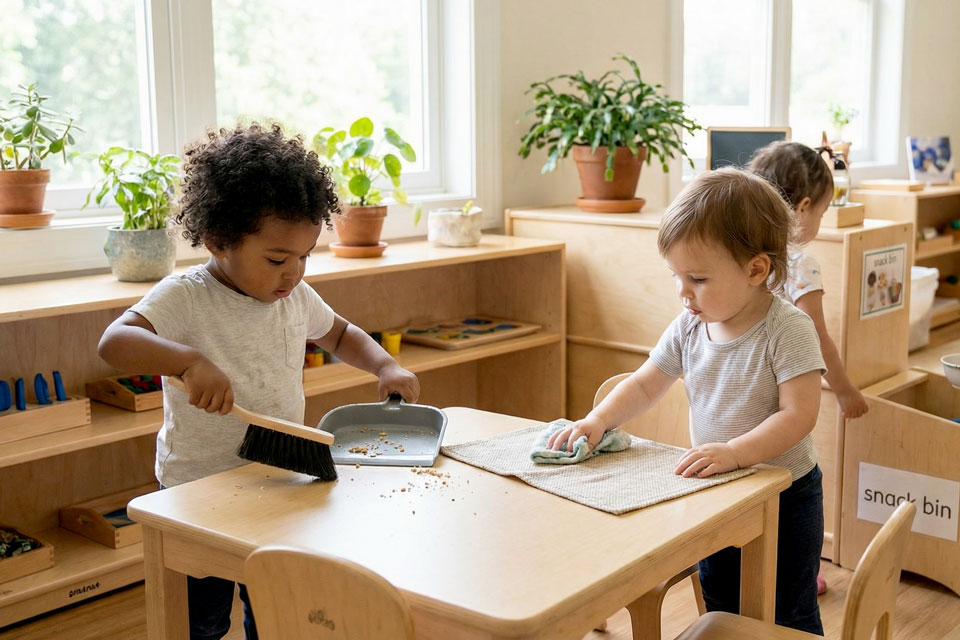
As toddlers explore their world and assert independence, routines help create order. Predictable patterns for meals, naps, cleanup, and outdoor play give toddlers a sense of control. When programs invite toddlers to participate—washing hands, choosing a snack bowl, putting toys in baskets—they gain confidence and early self-help skills.
How parents can extend school routines at home:
- Offer simple choices: “Do you want the red cup or the blue cup?”
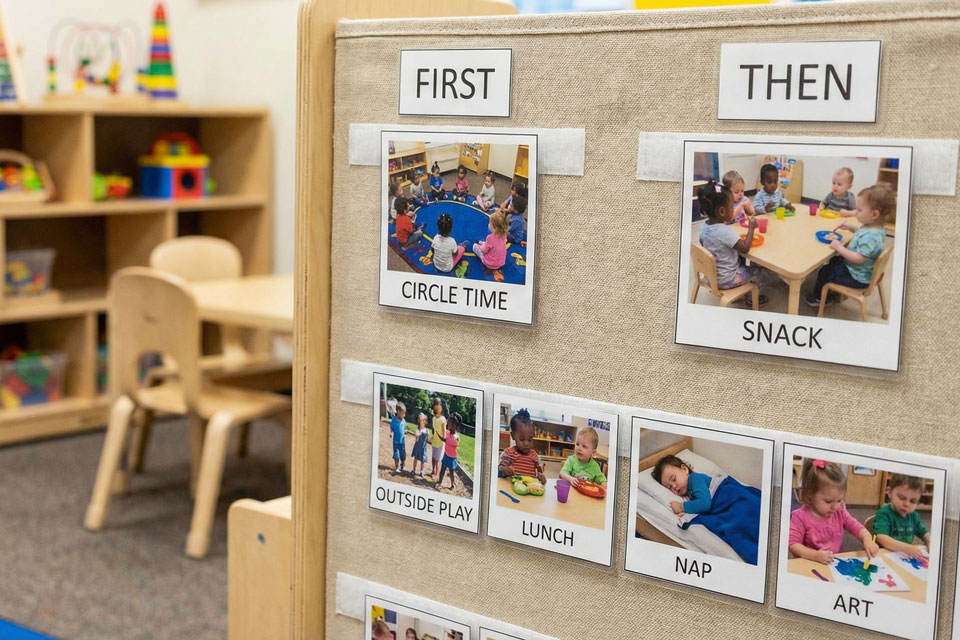
- Use short phrases during transitions: “First wash hands, then snack.”
- Provide opportunities to participate in everyday tasks such as carrying a spoon to the table or putting laundry in a basket.
Visuals for toddlers at home and school:
- Photo schedules (pictures of their own home routines: wake up, snack, playtime, bath, bedtime).
- Two-step picture cards (e.g., “put on shoes → go outside”).
- Object-based cues (holding a diaper to signal changing time, handing a bib before meals).
Visuals work best when they reflect the child’s real environment—photos of their kitchen, bathtub, bedroom, or the classroom centers they recognize.
Preschoolers: Routines That Build Agency and Learning
For preschoolers, routines provide structure while offering meaningful roles. Morning meetings, center time, cleanup signals, daily classroom jobs, and visual schedules help children understand the flow of the day. Predictable transitions allow them to focus on play, exploration, collaboration, and problem-solving.
Understanding agency:
Agency refers to a preschooler’s growing ability to make choices, express preferences, influence their environment, and take purposeful action. It is the sense of “I can do things, my ideas matter, and I have the power to participate.” Well-designed routines nurture agency by giving children predictable chances to choose activities, take on roles (“line leader,” “gardener,” “book helper”), and contribute to the classroom community.
How parents can continue school routines at home:
- Create a simple morning routine: use a picture of a toothbrush, hairbrush, breakfast, and shoes lined up in order.
- Establish predictable homework or reading time, even if it is brief.
- Involve preschoolers in family jobs: watering plants, setting the table, matching socks, or feeding a pet.
Home and school visuals for preschoolers:
- Visual schedules with icons or photos (“Wake up → bathroom → breakfast → school”).
- Checklists for morning or bedtime routines.
- “First–Then” boards (“First clean up toys, then play outside”).
- Daily job charts with the child’s photo next to their classroom or home responsibility.
- Emotion charts to help children name feelings during routines such as transitions.
How Routines Change as Children Grow
Routines should evolve as children’s developmental needs, abilities, and interests change.
- Infants need routines built on responsive caregiving, sensory comfort, and connection. Their routines change slowly and revolve around biological needs.
- Toddlers need simple, predictable structures that allow for independence and participation. Their routines shift as they become more verbal, mobile, and eager to help.
- Preschoolers thrive with routines that include choice, responsibility, and problem-solving. Their routines expand as they develop social skills, memory, and the ability to follow multi-step sequences.
At home and in school, routines should be revisited regularly. As children mature, bedtime may include more steps, morning routines may include more independence, and classroom responsibilities may rotate to reflect emerging strengths and interests.
Educators: Routines That Support Calm and Professionalism
Educators rely on routines just as children do. Predictable classroom setups, clear behavior expectations, and consistent transitions reduce stress and help teachers maintain calm, organized environments. These patterns free educators to focus on meaningful interactions, observation, and responsive teaching.
Administrators: Routines That Build Program Consistency
Leaders play a key role in shaping routines that support both children and staff. Consistent schedules, stable staffing, and clear communication help programs run smoothly. When administrators protect uninterrupted play time, support classroom routines through coaching, and keep communication predictable, educators and families experience greater trust and stability.
Closing Thoughts
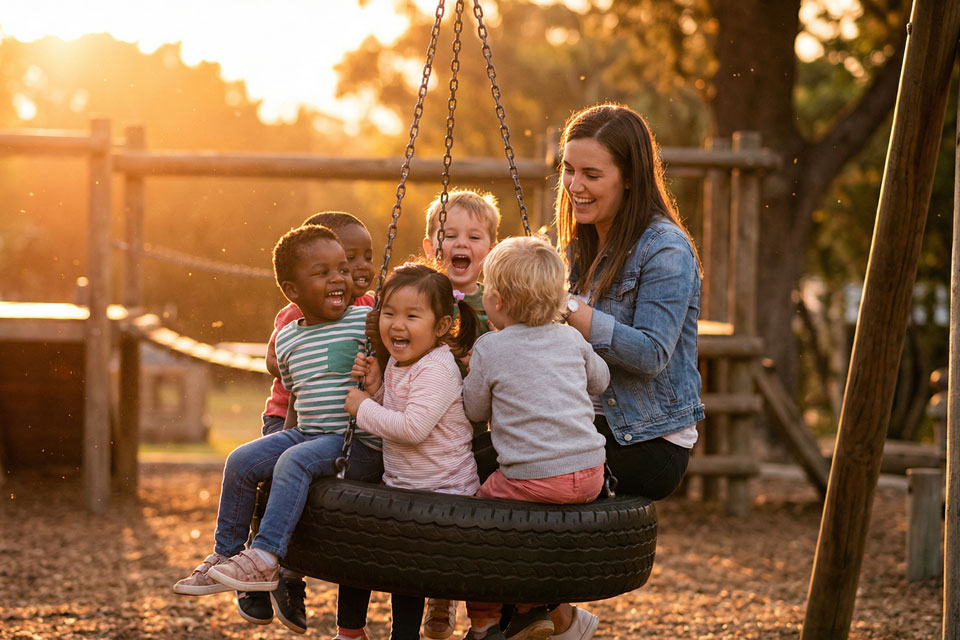
Routines help infants trust, toddlers explore, preschoolers participate, and adults stay centered. They are the quiet structures that support joy, learning, emotional health, and strong relationships. When families and educators work together to keep routines steady and loving, children feel calm and confident. They begin to trust the world around them, enjoy trying new things, and grow in joyful, meaningful ways—every single day.