
A guide to developmentally appropriate practice for educators, directors, and families
I’ve spent my career on both sides of the classroom door — as a teacher, then as a director running a preschool program for 25 years, and for 20 years beyond that providing professional learning to educators, directors, and coaches while helping build early learning systems. Through all of it, I keep coming back to the same idea: good teaching for young children isn’t about doing “more school” earlier. It’s about understanding how children actually develop and building everything else around that. This post is my attempt at a clear, no-jargon guide to what that means — and why it still holds up.
If you’ve heard the term Developmentally Appropriate Practice (DAP) tossed around at a staff meeting or printed on a licensing checklist without much explanation, this post is for you. If you’re a family member wondering why your child’s classroom looks more like a village of block towers than rows of desks, this is for you too.
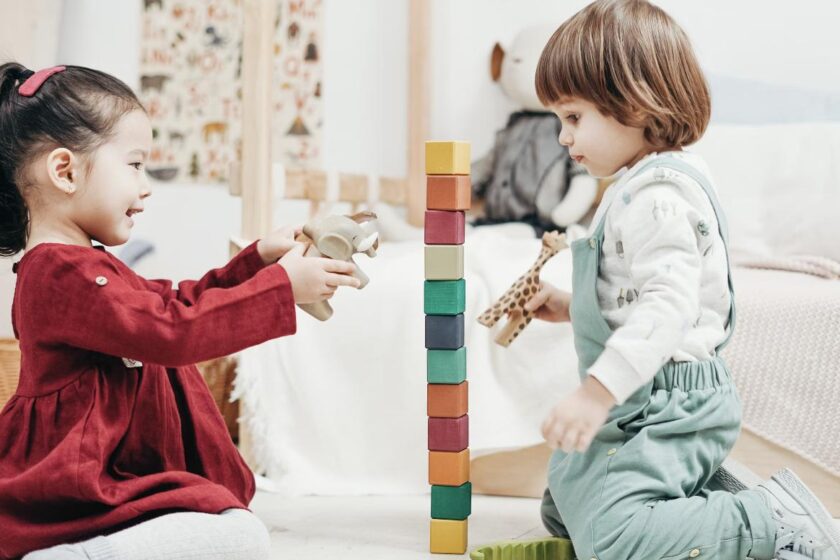
Picture the block corner on an ordinary morning. Two children are building a tower. One child keeps saying “higher, higher” while the other steadies the base, and they’re negotiating whose turn it is to add the next piece — that’s cooperation and language. The tower keeps toppling past a certain height, so they start experimenting with a wider base — that’s early physics and problem-solving, arrived at through trial rather than instruction. A teacher crouches down beside them, wonders aloud why the tall skinny one keeps falling, and hands over two more blocks instead of the answer — that’s a role model working inside the play, not above it. None of this looks like “curriculum” if you’re picturing worksheets. It is the curriculum.
So, what is DAP, exactly?
I think of developmentally appropriate practice as the answer to a question I asked myself constantly, first as a teacher and later as a director: how do I know if what’s happening in this room is actually good for this child? Not good in a general sense — good for this child, at this age, in this family and community. That’s the whole framework, really. The National Association for the Education of Young Children (NAEYC) has spent decades refining the language around it, and their current position statement (updated in 2020) organizes it around three things I still find myself checking against: what we know generally about how children grow, what makes this particular child who they are, and the culture and community surrounding them. It was never meant to be a curriculum you purchase off a shelf. It’s a way of making decisions, one child and one moment at a time.
What we generally know about how young children grow and learn
The traits and experiences unique to this specific child
The culture, community, and setting surrounding the child, family, and educator
And I want to clear something up that I ran into constantly: DAP isn’t just a preschool idea. NAEYC defines “early childhood” as birth through age 8 — infants and toddlers, preschoolers, kindergartners, and children through third grade. The three things I check against don’t change as children get older; what changes is what they look like at each stage. A developmentally appropriate second-grade classroom runs on the exact same logic as that block corner. Just with older blocks.
The nine principles behind DAP
Over the years, I’ve come to think of these nine principles as the scaffolding under everything I did in a classroom, and everything I later coached other directors and teachers to do. Here’s what each one means, in plain terms and from the vantage point of having lived through all of them.
1. Development is biology and environment, working together
I saw this most clearly early in my career, working in toddler and preschool rooms: a child’s growth isn’t fixed by genetics or shaped entirely by their surroundings — it’s both, constantly interacting. Early relationships literally help build the brain’s architecture, which is why the quality of care in those first few years matters as much as it does.
2. Every domain of development matters, and they’re linked
This is something I had to learn with teachers and directors over and over: physical, cognitive, social-emotional, and language development aren’t separate tracks. A child’s motor skills affect what they can explore, which affects what they can think about, which affects how they interact with others. You can’t strengthen one domain in isolation — and you can’t judge a child’s day by watching only one of them.
3. Play is essential, birth through age 8
This was the principle I defended most often — for years, from experience alone. Play is what children do best, so why do we continue to underestimate its value, especially in policy and standards? Defending it from experience alone is no longer necessary. It’s an evidence base now.
A 2023 randomized trial in Norway found that a play-based curriculum boosted young children’s math skills along with their attention and flexible thinking, echoing an earlier U.S. study linking block play to stronger math reasoning and executive functioning. Several of these studies found the gains were largest for children from lower-income backgrounds, who progressed further with play-based approaches than with direct instruction alone.
Play isn’t the enrichment. Play is the mechanism — all the way through third grade, not just preschool.
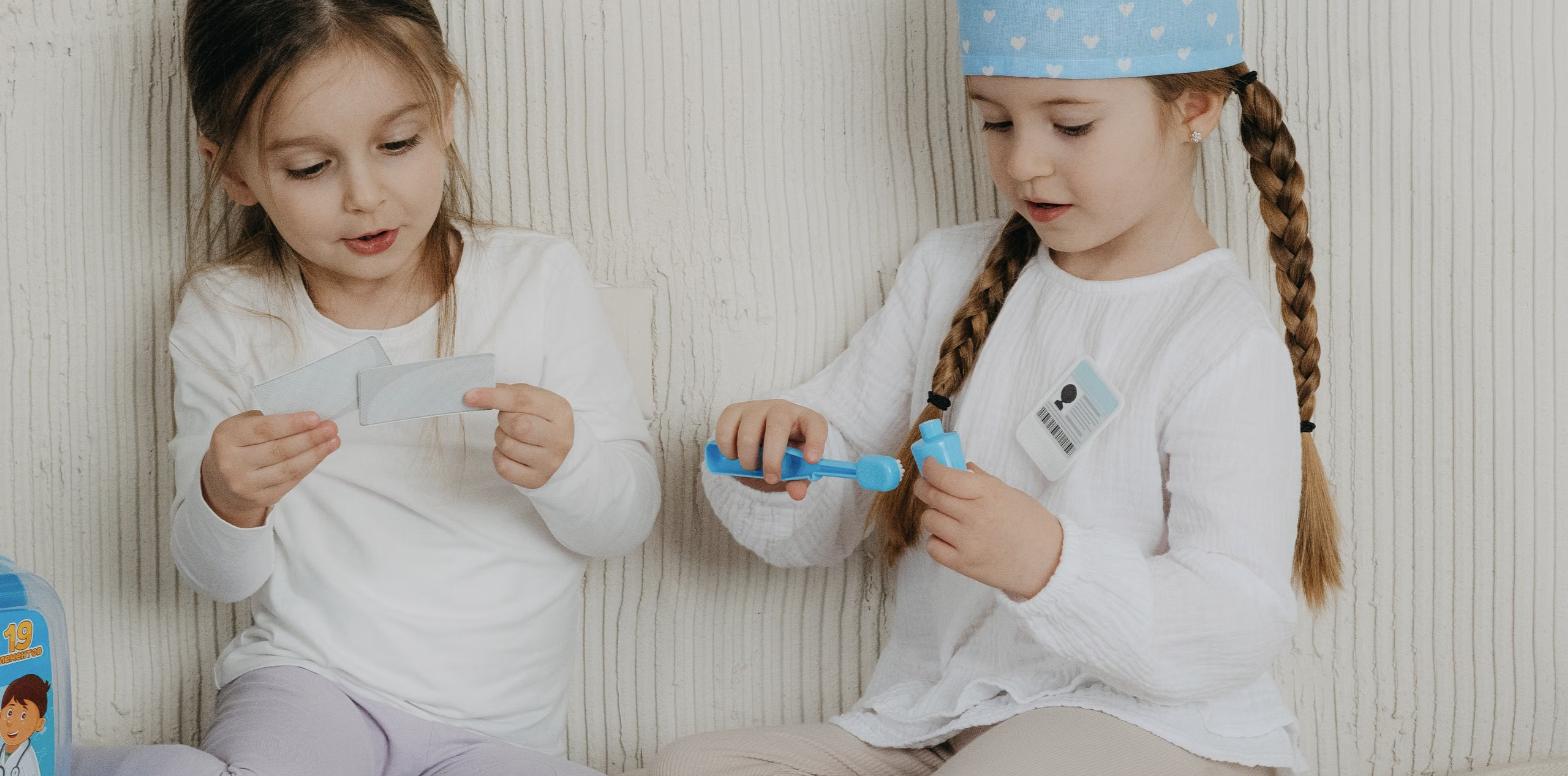
What makes this evidence base different from a decade ago is where the gains show up later. The skills play builds — attention, flexible thinking, self-regulation — aren’t confined to the moment they’re practiced. They’re the same skills that predict how a child handles a full-day kindergarten schedule, sits with a hard problem instead of giving up on it, and works alongside other children without an adult managing every interaction. Direct instruction can teach a child a fact.
Play is what teaches a child how to learn — and that distinction is exactly what shows up years later, when the children who had rich, sustained play in their early years are the ones with the stronger foundation for formal academic learning, not despite the play, but because of it.
4. General patterns exist, but so does real variation
I learned this watching two children the same age develop on completely different timelines: children broadly follow similar developmental paths, but culture, language, and individual differences shape how and when that shows up. There’s no single “normal” timeline every child should be measured against — and no version of that timeline should make a family feel behind.
5. Children are active meaning-makers from birth
Even infants are building theories about how the world works from their relationships and experiences, something I saw in the youngest rooms. Children construct their own understanding — they don’t just passively receive information from adults, however much we might want teaching to work that simply.
6. Belonging and agency drive motivation
This is the piece I’ve watched the field sharpen the most over my career, and the piece I care most about getting right. It was the core of our practices in our preschool — it is what mattered most to our children and our teachers. And I see it mattering just as much for teachers of young children: their belonging and agency, too.
When NAEYC revised its position statement in 2020, the update leaned much harder into the social, cultural, and historical realities shaping every child’s development, treating equity not as an add-on but as central to what “appropriate” means — children need to see their home language and culture reflected in the room, and to have real choices, not just rewards for compliance.
7. Learning happens across subjects at once, not in silos
Every good teacher I’ve worked with intuitively understood this before it had a name: young children don’t experience “math time” and “science time” as separate boxes — a cooking project is measurement, chemistry, language, and social studies all at once. NAEYC is direct about this too: thinking young children aren’t ready for academic content is a misunderstanding of DAP. The real question I always asked my staff was how content arrives, never whether it belongs.
8. Growth happens at “just right” challenge
This is the balance I spent most of my coaching career trying to help teachers find: children grow the most when a task is just beyond what they can already do on their own, with an adult’s support to bridge the gap and plenty of chances to practice. Too easy, and there’s no growth. Too hard with no support, and children just give up — and I watched both mistakes happen far more often than either extreme should.
Scaffolding is the word for that bridge, but it’s a harder skill to build in a teacher than the word suggests. It isn’t a script and it isn’t a single technique — it’s a constant, moment-to-moment read of one child, adjusted on the fly. The same task that needs a teacher to step in and model for one child needs almost nothing from her for the child next to him. That’s the part that took teachers the longest to trust: the right amount of help is never fixed, and it keeps changing as the child gets better at the task in front of them.
The teachers who got the best at scaffolding weren’t the ones with the most strategies. They were the ones who got comfortable watching a child struggle a little longer than felt natural.
9. Technology can help, used intentionally
This one came later in my career, and I approached it the same way I approached every new material that entered a classroom: screens and digital tools aren’t inherently good or bad — they’re a tool that can support learning and family communication when used thoughtfully. But they shouldn’t replace hands-on, real-world experience, especially for the youngest children in any classroom.
The research since has sharpened exactly where that line sits, and it isn’t really about the screen at all. A recent meta-analysis pooling 100 studies found that watching alone is linked with poorer cognitive outcomes, while co-viewing with an engaged adult is linked with better outcomes — the same device, used in different ways, producing opposite effects. That matches what I always suspected watching classrooms use technology well and badly: the device was never the variable that mattered. The adult next to it was.

There’s an equity dimension here I don’t think gets said enough. Co-viewing — an adult sitting with a child through the screen time, narrating and asking questions — is the single most protective factor researchers have identified, and it appears to matter most for children from lower-income backgrounds, limiting the potential negative impacts of screen exposure for that group specifically. But that’s also the group with the least uninterrupted adult time to give it. So families and classrooms that could benefit most from intentional co-use are often the ones with the fewest minutes to spend doing it — which means “use it intentionally” can’t just be advice aimed at parents and teachers individually. It has to be something programs plan for and protect time for, the same way they’d protect time for outdoor play or center time.
What about pushing academics too early?
This is the tension I ran into more than almost any other, sitting across the table from a lot of well-meaning people. The pressure — from kindergarten readiness checklists, from curriculum vendors, from anxious relatives — pushes formal academics earlier than children across the birth-through-8 span DAP is built for can actually support: flashcards for a toddler, worksheets for a preschooler, reading drills before a child has the eye-brain coordination reading actually requires. Early childhood researchers have a name for this trend: the “push-down” curriculum, where skills that used to be taught in first grade get handed to infants, toddlers, and preschoolers instead. I spent my entire career pushing back against exactly this.
I watched this exact contrast play out more times than I can count: a three-year-old building with blocks is doing exactly the right work for where their brain is — testing balance, cause and effect, spatial reasoning — through direct, physical experience. Ask that same three-year-old to sit and drill letter names off a flashcard instead, and you’re asking them to do something abstract before their brain is built for it. Recognizing that a letter is a symbol standing for a sound requires exactly the kind of abstract thinking young children are still developing. Pushed early enough, it typically just means less time for the things that are within reach right now: rich talk, exploration, building, pretend play.
This is the piece of research I wish every person could sit down and read.
One of the more sobering pieces of evidence here comes from a long-running comparison of preschoolers randomly assigned to a direct-instruction program versus child-initiated, play-based programs, then followed all the way to age twenty-three. The direct-instruction group ended up with dramatically higher rates of special education placement and felony arrests as young adults than the children from the play-based classrooms. It’s one study, decades old, and shouldn’t be read as the final word — but it’s a striking caution against assuming that more formal instruction earlier simply produces better outcomes down the road.
The research on executive function tells the story I always tried to tell families in plain language: the skills that best predict later academic success — focus, planning, self-regulation, holding information in mind — are built through the exact kind of rich, open-ended play DAP already calls for. A block tower is teaching measurement and spatial reasoning. A pretend restaurant is teaching narrative structure and perspective-taking. None of that shows up on a worksheet, but it’s doing the academic work anyway, just earlier in the pipeline than the flashcard does.
I never argued that academics have no place before kindergarten. What I argued for, again and again, was sequencing. Letters, numbers, and early literacy show up constantly in a developmentally appropriate classroom — in the sign-up sheet for the dramatic play corner, in counting out snack cups, in a story dictated and “written down” by the teacher. The difference is whether those academic pieces arrive through meaningful, child-driven experience, or whether they’re drilled in ahead of a child’s readiness because a checklist says they should be there by now.
What this means in practice
Here’s what I’d tell each of you directly, based on years of being all three of these people at different points in my career.
- A classroom full of play is not a classroom without learning — ask your child’s teacher what skills a specific activity is building.
- Notice whether your family’s culture and language show up in the room, not just on a bulletin board once a year.
- Look for warm, responsive relationships as much as you look for academics. Both are the curriculum.
- Before adding a new activity, ask which core consideration it serves: commonality, individuality, or context.
- Get on the floor. Your presence inside the play is part of its developmental value, not separate from it.
- Revisit your room’s materials and stories through the lens of the specific families in front of you, not a generic “diversity” checklist.
- Support teachers: coach on the “why,” not just the “what” — a teacher who can explain the developmental purpose behind an activity can hold the line when a family member or a checklist pushes for worksheets. Protect planning time for observing and documenting children, not just delivering lessons.
- Shape program culture: make DAP a shared language across the building, not one teacher’s philosophy. Model it in how you run staff meetings and give feedback, so it’s felt in the culture, not just posted on a wall.
- Center families: build real two-way channels — not just newsletters, but conversations that bring each family’s culture and priorities into how the classroom runs. When a family member asks “are they doing enough real work,” make sure both you and your teachers can answer with confidence.
Why it holds up
After decades in this field, the research has mostly done one thing for me: given language and data to what I already knew from watching children closely, first as a teacher and later as a director. That’s not a small thing. It means the field has gotten more rigorous without losing what it has always understood about how young children actually grow — through relationships, culture, language, and above all, play.
And underneath all of it is something simple that’s easy to lose in a conversation about standards and readiness: children learn best when they’re joyful. Not entertained, not placated — genuinely delighted by what they’re doing. We continually disregard the essence of learning — joy. That laugh when a block tower finally holds, the pride in a story they made up themselves, the comfort of being known by name and culture in a room — that isn’t separate from the learning. It’s the condition that makes the learning stick. I witnessed so many childhoods spent joyfully engaged with the world, and that time isn’t borrowed from later achievement. It’s the foundation of it, and it matters for exactly the same reason it matters for the rest of us: a life well-lived isn’t one endured for the sake of what comes next. And the same holds true for adults — learning without joy doesn’t stick either.
Sources
Mallawaarachchi, S., Burley, J., Mavilidi, M.-F., et al. (2024). Early Childhood Screen Use Contexts and Cognitive and Psychosocial Outcomes: A Systematic Review and Meta-analysis. JAMA Pediatrics, 178(10), 1017–1026. https://doi.org/10.1001/jamapediatrics.2024.2620
National Association for the Education of Young Children (NAEYC). (2020). Developmentally Appropriate Practice: A Position Statement. Washington, DC: NAEYC. https://www.naeyc.org/resources/position-statements/dap
Schweinhart, L. J., & Weikart, D. P. (1997). The High/Scope Preschool Curriculum Comparison Study through age 23. Early Childhood Research Quarterly, 12(2), 117–143. https://doi.org/10.1016/S0885-2006(97)90009-0
Størksen, I., Rege, M., Solli, I. F., ten Braak, D., Lenes, R., & Geldhof, G. J. (2023). The playful learning curriculum: A randomized controlled trial. Early Childhood Research Quarterly, 64, 36–46. https://doi.org/10.1016/j.ecresq.2023.01.015
Comment and make it public on Facebook